Hardening Organisations
Helping organisations build practical resilience through governance, decision-making, and cyber readiness, sharing real-world experience on what works and how to deploy it at speed and scale.

Our story
The European Resilience Summit is where Europe's infrastructure, cybersecurity, and resilience leaders meet, work, and build lasting relationships. More than a conference, ERS is a growing community connecting public and private sectors as well as academia across borders, to strengthen Europe's ability to act under pressure.
Cities: Davos · London · Vienna · The Hague · Paris · Berlin
The ideas that shape the programme and connect policy, operations and real-world resilience.
Helping organisations build practical resilience through governance, decision-making, and cyber readiness, sharing real-world experience on what works and how to deploy it at speed and scale.
Strengthening Europe's resilience industries, cybersecurity, cloud, defence, and critical infrastructure, by connecting policymakers, buyers, builders, and investors to turn policy into industrial reality.
Exploring how Europe can work with global technology leaders in ways that build resilience, not dependency, through smarter procurement, governance, and safeguards.
Connecting people across borders and sectors to build the trust and cooperation that can't be improvised in a crisis.
From structured decision rooms and live crisis exercises to strategic exchanges and practical workshops, ERS uses formats designed to connect policy, operations and real-world resilience.
A structured, data-driven session that puts senior stakeholders inside a real-life challenge. Participants move beyond positions and commit to strategic actions, revealing how decisions are made under pressure.
FORMAT IN PRACTICE: A real-life challenge requiring high-stakes strategic decisions.
A 45-minute command-room exercise in which the audience acts as an executive leadership team during a cascading infrastructure failure. Real-time Slido decisions at four points reshape the scenario and surface dependencies and leadership blind spots.
SCENARIO DESCRIBED IN THE BROCHURE: A 72-hour infrastructure failure, with decisions at Hours 1, 24, 48 and 72.
A curated exchange that brings policy-makers, end-users and infrastructure-builders into the same conversation. It tests policy ambition against operational reality around a specific resilience topic.
EXAMPLE FRAME: A resilience topic shaped with the stakeholders who write the rules and those who build the infrastructure.
Practical workshops that move from the ‘what’ to the ‘how’. A case study, infrastructure audit, RETEX analysis or demo lets participants test an approach against real industry constraints.
POSSIBLE SESSION APPROACHES: Technical case study · live infrastructure audit · RETEX analysis · demo.
The community
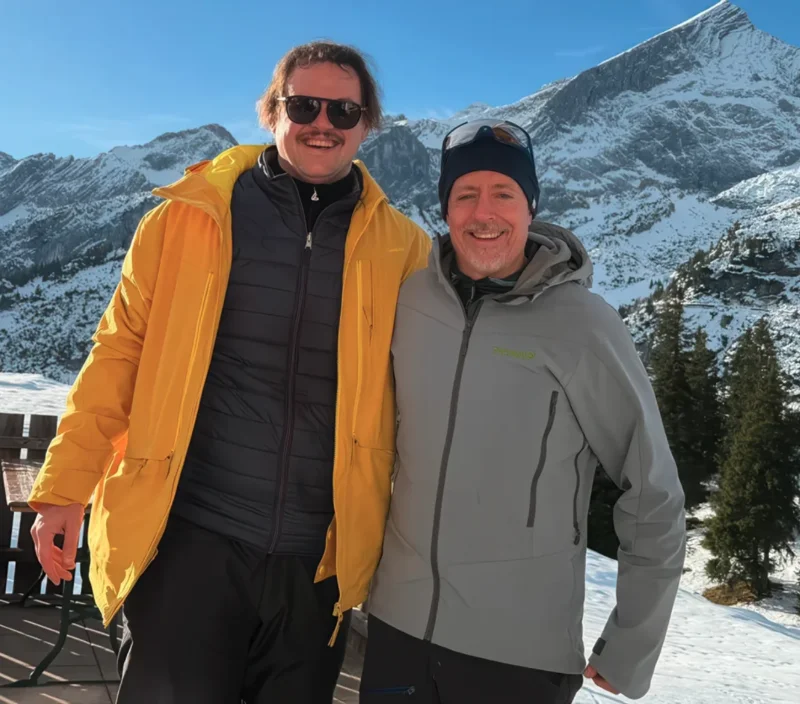
Where it began
The idea for the European Resilience Summit began not in a boardroom, but on a mountain run in the Alps, a conversation between Paul Hammer, CEO of Dockland Media Group, and Philipp Müller, VP Public Sector at DriveLock SE. What started as a shared question, how does Europe stay capable when systems are under pressure, became a conference series, and then something bigger: a community.
Read the Full StoryBehind ERS
A dedicated team curating Europe’s most candid conversations on resilience, bringing together policymakers, industry leaders and operators across the continent.
Contact the team